

Restrictive Covenants on Property: What UK Buyers Must Check
A restrictive covenant can stop an owner from using or altering property in particular ways, even when the proposed work might otherwise be permitted under planning rules. Covenants can affect extensions, commercial activity, multiple occupancy, boundaries or further development. The exact wording and legal enforceability matter more than a generic list of restrictions.
Before buying or converting a property in England or Wales, ask your conveyancer to review the title register, any documents referred to in it and the parties who may benefit from the covenant. A covenant is not automatically void because it is old, and a planning permission does not necessarily remove a private covenant.
What is a restrictive covenant?
A restrictive covenant is typically a binding promise attached to land that limits specified uses or activities. Examples include not building without consent, not using the property for business, or restricting alterations. Its effect depends on the wording, benefited land and relevant law, so it should be interpreted by a property solicitor rather than guessed from the estate agent’s description.
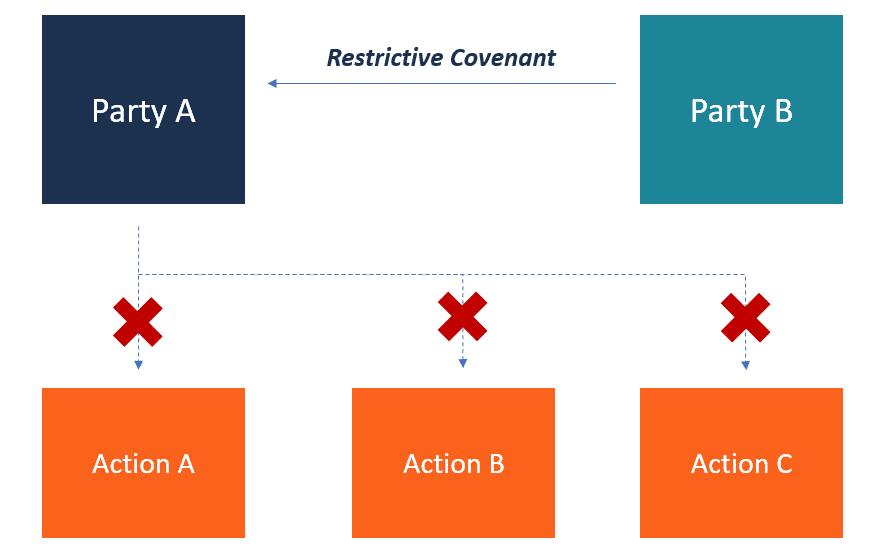
Source: CFI
Restrictions may have been imposed to protect neighbouring land, an estate development or a former landowner’s retained interests. They can be relevant to an investor planning conversion, further construction, commercial use or a change in occupancy. Common topics include:
Limitations on property changes
A covenant might prohibit building extensions or altering the appearance of a house without specified consent. Planning approval and building-regulation compliance are separate from the question of who can enforce the covenant. Ask your solicitor whether consent, release or another remedy is needed before work starts.
Restrictions on additional structures
Some titles limit additional outbuildings, structures, fences or subdivisions. Check the exact wording and whether it applies to the proposed construction and the relevant part of the land, rather than assuming every shed or extension is banned.
Limitations on pets
Restrictions relating to animals sometimes appear in leases or estate covenants. Their enforceability and application vary. For leasehold property, read the lease and management rules as well as the title register, and ask the relevant solicitor about the actual restriction.
Restrictions on business operations
A covenant can restrict trading, business use, subletting or other activities. An investor considering serviced accommodation, conversion or an HMO should check planning, licensing, lease terms and covenants separately; passing one test does not establish compliance with the others.
How to find out your restrictive covenants
Search for the property on HM Land Registry’s property information service. For registered land in England and Wales, the title register and filed documents may refer to relevant restrictive covenants. A conveyancer can obtain and examine referenced deeds, identify possible beneficiaries and advise on likely enforceability.
If the property is leasehold, review the lease and any estate regulations. Check separate local planning and conservation rules too.
Check the Register and Filed Deeds
Do not use US “county recorder” guidance as the standard UK process. In England and Wales, start with HM Land Registry and ask for copies of any filed deeds mentioned in the title that explain a restrictive covenant. Some older rights may need further legal investigation, so the absence of an obvious note should not be treated as a complete legal opinion.
Check the seller’s disclosure statement
The seller should answer conveyancing enquiries accurately and provide relevant documents within their possession. However, seller disclosures alone are not a substitute for registered-title investigations and specialist advice. Ask about prior disputes, consent requests and breaches involving proposed or completed works.
Have a Property Solicitor Interpret the Restriction
Ask a UK property solicitor to establish what is prohibited, who may enforce it, how the wording applies to your proposed use and whether permission or a release is realistically available. This is particularly important before buying an HMO, development site or property requiring alterations.
If you breach a restrictive covenant
Potential consequences depend on the covenant, who has the benefit of it and the circumstances. An enforceable breach can expose an owner to disputes, legal costs or an injunction requiring works to stop or be reversed, and may affect future resale or finance. Do not assume a past breach has become harmless just because nobody has objected. Obtain legal advice before trying to regularise an issue.
How to get rid of a restrictive covenant
Possibilities may include negotiating consent or a deed of release with the party entitled to enforce the covenant, investigating whether it remains enforceable, applying to the relevant tribunal for modification or discharge where the legal criteria are met, or changing the intended works. None is automatic or guaranteed; the correct route is fact-specific.
Negotiate the release of the covenant
A solicitor can investigate whether the identifiable beneficiary will agree to consent, vary or release the restriction in exchange for agreed terms. The property seller cannot necessarily release a covenant benefiting someone else, so obtain formal legal documentation rather than a casual assurance in an email.
For investment acquisitions, combine legal covenant checks with the Pearl Lemon Properties deal review framework to assess whether the overall purchase remains commercially viable.
Apply to the Lands Tribunal
You can also ask for the covenant to be discharged or modified to the Lands Tribunal, explaining why the deed restriction no longer serves a useful purpose.
Pay the owner
If those don’t work, you might be able to pay the seller to release the covenant or amend it.
Conclusion
Now that you know more about restrictive covenants, you can decide if you can live with them and use them to your benefit or not. Don’t fall in love with a property before you find out the information.
It’s important to consider any deed restrictions before you buy property, so always make sure to check with your solicitor.
About The Author